The AI Revolution: What It Means for You
You woke up this morning and your phone suggested the fastest route to work. Your email had already sorted spam from real messages. Netflix queued up a show you didn't search for but ended up loving.
That was AI. Working in the background. Without you noticing.
The AI revolution isn't coming. It's already here. And the question isn't whether it will affect your work — it's whether you'll be the one using it or the one wondering what happened.
AI Is Already Around You
You've been using AI for years without calling it that.
When Google finishes your sentence as you type a search — that's AI. When your bank texts you about a suspicious charge — that's AI. When Spotify plays a song you've never heard but somehow love — that's AI.
AI isn't a single product you download. It's a layer of intelligence built into tools you already use. Email filters, voice assistants, map directions, photo organization — all powered by AI working behind the scenes.
Open your phone's photo app and search for "dog" or "beach." It finds the right photos even though you never labeled them. That's AI recognizing what's in your pictures — no human sorted those for you.
The difference now? AI has gotten good enough to help with your actual work — writing emails, analyzing data, preparing presentations, researching competitors. That's the revolution. It moved from the background to your desk.
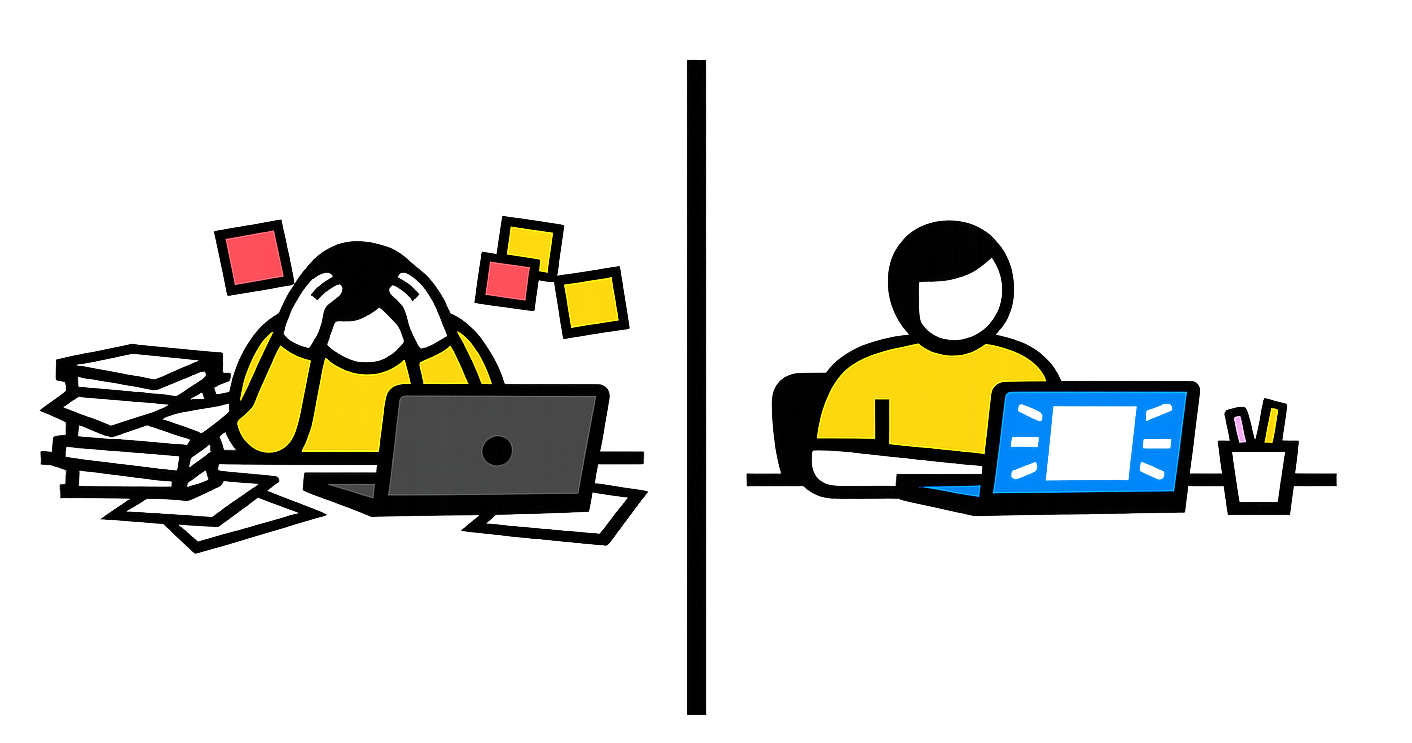
Before and After
The best way to understand the AI revolution is to see it side by side. Here's what a typical workday looks like for a product manager — but this applies to marketers, sales heads, and most professionals.
| Task | Before AI | With AI |
|---|---|---|
| Morning emails (30 unread) | Read each one, draft replies manually — 45 min | AI summarizes threads, drafts replies you edit — 15 min |
| Meeting prep | Search old docs, re-read notes, build agenda — 30 min | AI pulls key points from past meetings and docs — 10 min |
| Writing a project update | Stare at blank page, write, rewrite — 60 min | Give AI bullet points, it drafts the update — 15 min |
| Competitor research | Open 10 tabs, read articles, take notes — 90 min | AI researches, summarizes, and compares — 20 min |
| Data analysis | Build spreadsheet formulas, make charts — 45 min | Describe what you need, AI builds it — 10 min |
| End-of-day summary | Write it from memory — 20 min | AI generates it from your activity — 5 min |
| Total | ~5 hours | ~1.25 hours |
That's not a fantasy. Microsoft reports that heavy AI users save about 8 hours per month on meeting recaps alone. McKinsey found that 78% of organizations now use AI in at least one business function. And 90% of knowledge workers who use AI say it helps them save time.
AI doesn't replace your workday. It compresses the boring parts so you can spend more time on the work that actually needs your brain — strategy, decisions, relationships, creativity.
What AI Can Do
Here's what AI is genuinely good at right now — not in five years, but today.
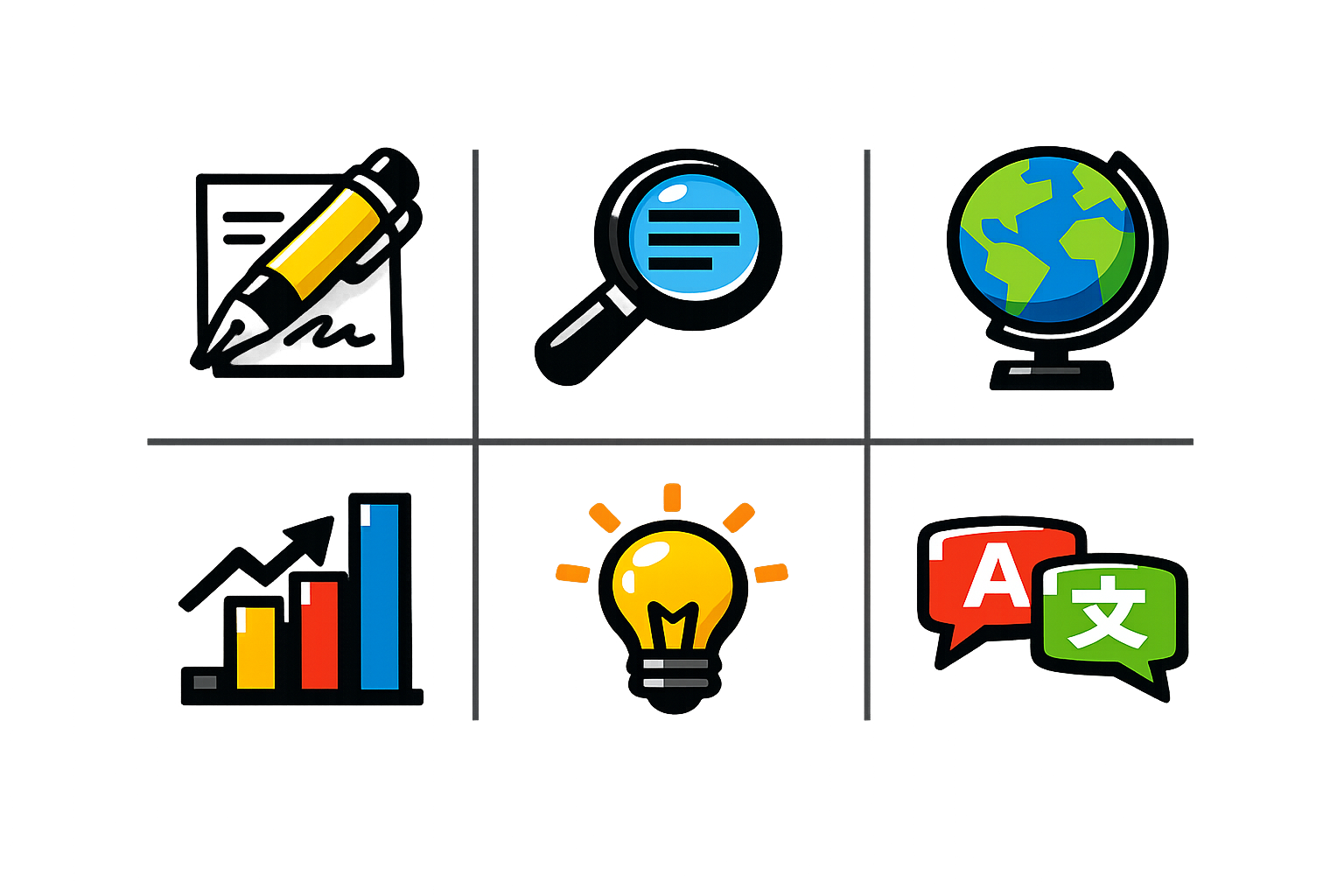
Writing and drafting. Give it bullet points, and it writes a polished email, report, or blog post. You edit and refine. Think of it as having a fast first-draft assistant who never complains.
Summarizing. Drop a 40-page document into AI and get a one-page summary in seconds. Meeting transcripts, research papers, legal contracts — it reads faster than any human.
Researching. Ask it to find information on a topic, compare competitors, or explain a concept. It pulls from vast knowledge and organizes it for you.
Analyzing data. Paste a spreadsheet and ask "what are the top trends?" AI spots patterns and creates charts without you writing a single formula.
Brainstorming. Stuck on ideas for a campaign, product name, or strategy? AI generates 20 options in seconds. Most will be average. A few will spark something great.
Translating and adapting. Need that email in Spanish? Want to rewrite a technical doc for a non-technical audience? AI handles tone and language shifts quickly.
What AI Cannot Do
This part matters just as much. Knowing AI's limits protects you from mistakes and helps you use it wisely.
AI cannot think. It predicts the next word in a sequence based on patterns. It doesn't understand what it's saying. It's like autocomplete on steroids — impressive, but not intelligent.
AI cannot guarantee accuracy. It sometimes makes things up with complete confidence. AI researchers call this "hallucination." A name, a statistic, a date — AI can invent any of these and present them as facts.
AI cannot judge. Should you fire that employee? Is this deal worth the risk? Should your company enter a new market? These decisions require human values, experience, and context that AI doesn't have.
AI cannot feel. It can write an empathetic email, but it doesn't feel empathy. It can sound excited, but it has no emotions. When a situation requires genuine human connection — a difficult conversation, a sensitive client call — AI words fall flat.
AI cannot replace expertise. It can help a marketer write faster, but it can't replace a marketer's understanding of their audience. It can draft a legal brief, but it can't replace a lawyer's judgment. AI amplifies skill — it doesn't create it from nothing.
Here's a good rule of thumb: use AI for the first draft, not the final say. Let it do the heavy lifting, then apply your judgment, experience, and common sense before anything goes out the door.
Why This Matters Now
You might be thinking: "This sounds useful, but can I learn it later?"
Here's why waiting is risky.
The gap is growing. 75% of knowledge workers already use AI at work. Almost half of them started in the last six months. Every month you wait, more of your peers pull ahead.
It's not about coding. You don't need to be technical. Modern AI tools are built for people who use apps, not people who build them. If you can type a question, you can use AI.
The bar is rising. Companies are starting to expect AI literacy the way they once expected Excel skills. Goldman Sachs estimates AI will boost productivity by 30-45% across industries. The professionals who capture that boost will stand out.
It's free to start. ChatGPT, Google Gemini, and Microsoft Copilot all have free versions. You can start experimenting today without spending a dollar.
This isn't about replacing you. It's about making you faster, sharper, and harder to compete with. The AI revolution rewards the curious.
Go to ChatGPT (free, no account needed for basic use) and type: "Summarize what AI means for a [your job title]." Read the response. Notice how specific and useful it is — even on your first try. That's just the beginning.
Good Read
- AI at Work Is Here. Now Comes the Hard Part — Microsoft's Work Trend Index on how professionals actually use AI
- The State of AI in 2025 — McKinsey's comprehensive report on AI adoption across industries
- Embracing Gen AI at Work — Harvard Business Review's practical guide to AI in the workplace
Up next, we'll answer the question you're probably thinking: what actually IS artificial intelligence? Not the sci-fi version — the real one. Head to What is Artificial Intelligence? to find out.