What is Artificial Intelligence?
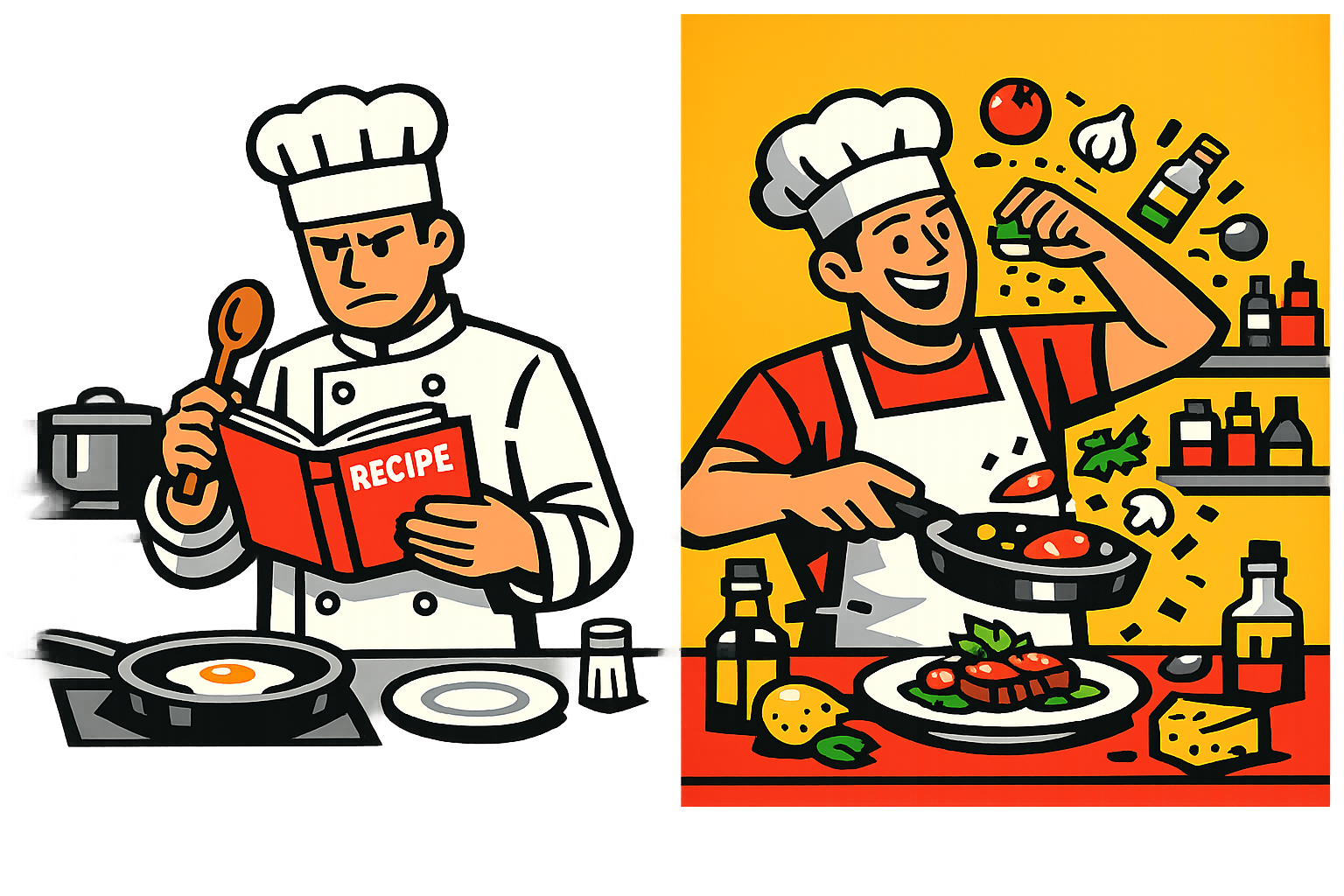
Imagine you hire two cooks for your kitchen.
The first cook follows a recipe book. Step one: boil water. Step two: add pasta. Step three: drain after eight minutes. Every single time, the same steps, the same result. If you hand this cook an ingredient that isn't in the recipe book, they freeze. They have no idea what to do.
The second cook has tasted thousands of dishes across dozens of cuisines. You hand them whatever ingredients you have, and they figure out something delicious. They adapt. They improvise. They get better every time they cook.
Regular software is the first cook. Artificial intelligence is the second.
A Simple Definition
Artificial intelligence is a broad term for computer systems that can perform tasks that normally require human intelligence.
That sounds abstract, so let's make it concrete. Here are tasks that "normally require human intelligence":
- Understanding language. When you ask Siri "What's the weather today?" it understands your words and responds. That's AI.
- Recognizing images. When Google Photos finds every picture of your dog without you labeling a single one. That's AI.
- Making predictions. When your bank texts you about a suspicious charge before you notice it. That's AI.
- Creating content. When ChatGPT writes a draft email from your bullet points. That's AI.
Notice the pattern. AI isn't one product or one app. It's a capability -- the ability to handle tasks that used to require a human brain. Sometimes it understands language. Sometimes it recognizes faces. Sometimes it writes. The common thread is that it does things we used to think only people could do.
You already use AI every day. Your email spam filter, your map app's traffic predictions, your streaming service's recommendations -- all AI. The technology isn't new. What's new is how good it's gotten and how accessible it is.
AI vs Regular Software
This is where most people get confused, so let's clear it up.
Regular software follows instructions exactly. A developer writes specific rules: "If the customer enters the wrong password three times, lock the account." The software does exactly that. Nothing more, nothing less. It can't handle a situation the developer didn't plan for.
AI learns from examples. Instead of writing every rule by hand, developers show AI thousands (or millions) of examples. The AI finds patterns in those examples and uses them to handle new situations it has never seen before.
Here's a real-world comparison that makes this click.
Think about how your email inbox handles spam. The old way (regular software) would be a list of rules: block emails containing "you won a prize," block emails from certain addresses, block emails with too many exclamation marks. But spammers kept finding new tricks that didn't match the rules.
The AI way? Show the spam filter millions of emails -- some spam, some real. The AI learns to spot patterns that humans might miss: the writing style, the sender behavior, the link patterns, the timing. When a brand-new type of spam arrives that nobody has seen before, the AI can still catch it because it recognizes the underlying patterns, not just specific keywords.
| Regular Software | AI | |
|---|---|---|
| How it works | Follows rules written by developers | Learns patterns from data |
| Handles new situations? | Only if a rule exists for it | Yes, by recognizing similar patterns |
| Improves over time? | Only when developers update the code | Can improve as it sees more data |
| Best for | Predictable, rule-based tasks | Complex, pattern-heavy tasks |
| Example | Calculator, spreadsheet formulas | Voice assistants, image recognition |
Regular software does exactly what it's told. AI figures out what to do from examples. That's the fundamental difference. Software follows a recipe. AI learns to cook.
The Illusion of Intelligence
Here's the part that trips people up. AI can write poetry, answer complex questions, and hold conversations that feel genuinely intelligent. So is it actually thinking?
No. And understanding why is important.
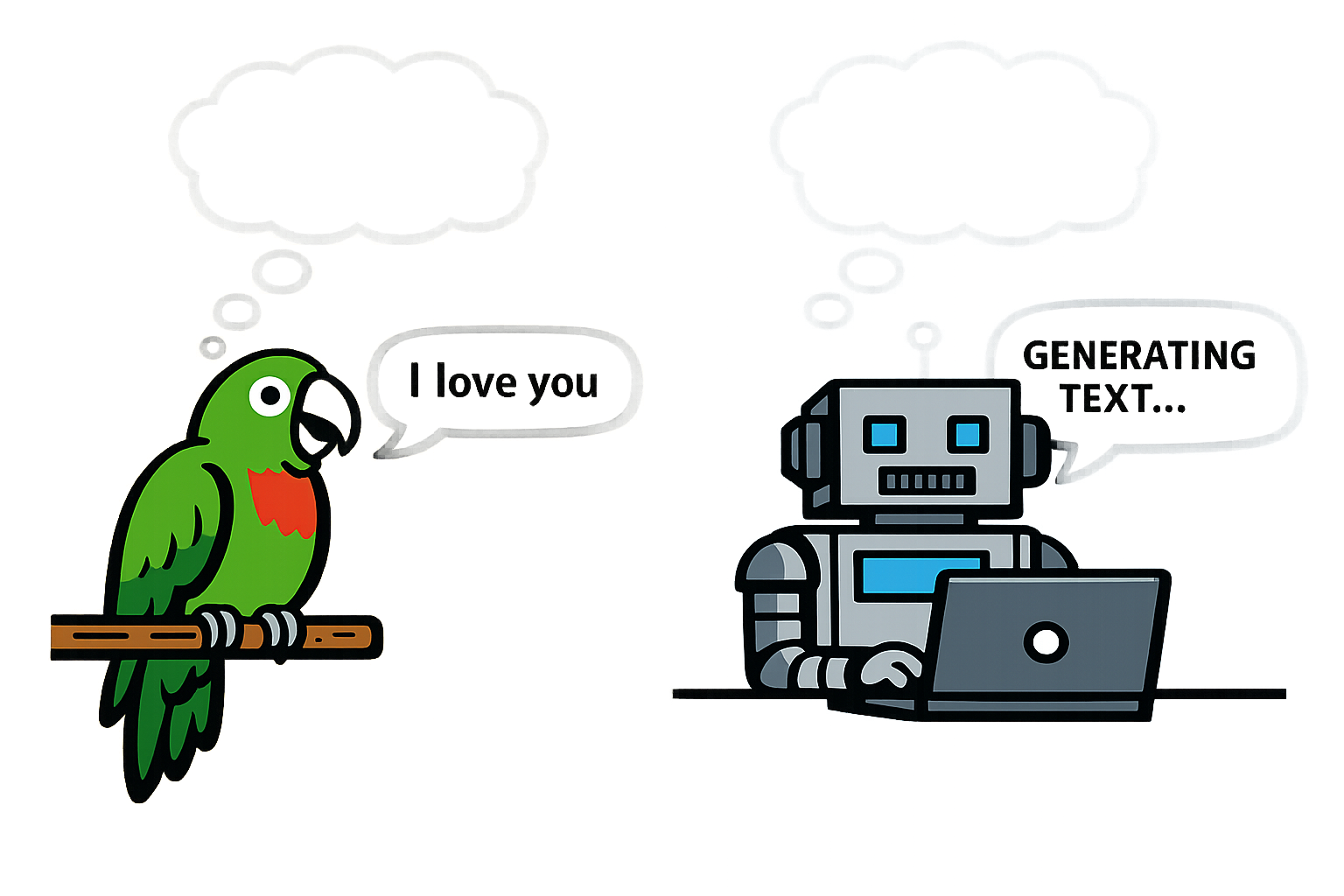
Think about a parrot. A well-trained parrot can say "I love you" in a way that sounds sincere. But the parrot has no idea what love means. It learned that making those sounds in a certain order gets a positive reaction. The sounds are right. The understanding isn't there.
AI works in a similar way -- just at a much more sophisticated level. When ChatGPT writes a paragraph, it's predicting the most likely next word based on patterns it learned from billions of text examples. It's not understanding your question. It's not forming an opinion. It's doing extremely advanced pattern matching.
As the Marketing AI Institute puts it: AI "isn't science fiction or magic. It's just very sophisticated math."
Here's what that means in practice:
- AI can summarize a legal document -- but it doesn't understand the law
- AI can write a marketing email -- but it doesn't know your customers
- AI can spot patterns in sales data -- but it can't judge whether a deal is worth the risk
- AI can sound confident -- even when it's completely wrong (researchers call this "hallucination")
This is not a flaw. It's simply what AI is. A powerful pattern-matching tool. The more you treat it as a tool and less as a thinking partner, the better your results will be.
Next time you read an AI-generated response, ask yourself: "Is this genuinely insightful, or does it just sound insightful?" That one question will make you a smarter AI user than most people.
Why This Matters for You
Understanding what AI actually is -- a pattern-matching tool, not a thinking machine -- changes how you use it.
In the previous topic, we saw how AI can compress a 5-hour workday into 1.25 hours. Now you know why it can do that. AI is brilliant at tasks that involve patterns: drafting, summarizing, analyzing, sorting, recommending. Those tasks eat up most of your day.
But AI fails at tasks that require true understanding: judgment calls, ethical decisions, creative leaps, reading a room. Those tasks still need you.
The professionals who thrive with AI are the ones who understand this boundary. They let AI handle the pattern-heavy work and focus their own energy on the work that requires genuine human intelligence.
That's what makes AI a superpower, not a replacement.
AI is a pattern-matching tool, not a thinking machine. Use it for what it's good at -- drafting, analyzing, summarizing, predicting -- and apply your own judgment for everything else.
Up next, we'll look at the terms you hear everywhere but might not fully understand yet: AI, Machine Learning, and Deep Learning. They're related but different, and knowing the distinction will help you pick the right tool for the right job. Head to AI vs. ML vs. Deep Learning to untangle them.
Good Read
- What Is AI? A Simple, Non-Technical Guide -- Marketing AI Institute's beginner-friendly breakdown of artificial intelligence
- What Is Artificial Intelligence? Definition, Uses, and Types -- Coursera's comprehensive overview covering AI types and real-world examples
- What is AI? A Beginner Friendly Guide -- Field Guide to AI's practical explainer with key terms and responsible use tips